


ONLINE COURSE
UI/UX Design for AI Products
Design the next generation of AI-powered experiences
AI is changing how digital products are designed, built, and experienced. For UX professionals, product managers, and technology teams, the challenge is no longer just adding AI capabilities; it is designing AI-powered experiences that are intuitive, useful, and trusted by users. To meet this growing demand, Stanford Online has developed a job-relevant curriculum to guide you through your AI-powered design journey. This course explores how to create effective human-AI interactions through proven design patterns, prototyping methods, and practical frameworks. You will learn how to move beyond generic prompt-based interfaces, balance automation with user control, and design AI products that address real user needs.
How your AI product design journey unfolds
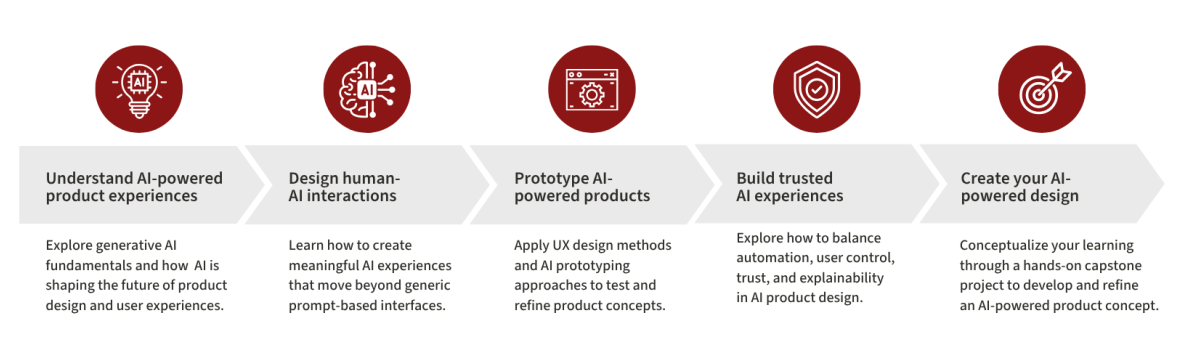
AI UX design skills you will gain

Design more effective AI-powered interfaces
Create AI-enabled product experiences where AI is integrated into workflows in ways that are useful, clear, and actionable for users.

Move beyond one-size-fits-all chatbot experiences
Recognize the limitations of prompt-based interactions and design more specific, task-focused AI experiences.

Prototype AI-powered experiences before building
Use LLM-based and Wizard of Oz prototyping methods to test AI interactions, user expectations and product concepts.

Make better automation decisions
Balance AI automation with user control by applying human-AI interaction design principles that support usability and reduce errors.

Design for calibrated trust in AI systems
Identify challenges such as overreliance and undertrust, and create experiences that help users engage with AI appropriately.

Apply AI tools with design judgment
Evaluate AI-augmented design tools and understand how they can support, rather than replace, human-centered design practices.
Who will benefit from this course?

UI, UX, and product designers who want to design AI-powered features, workflows, and interfaces that are useful, intuitive, and aligned with user needs

Senior designers, design leads, and product practitioners looking to guide human-AI interaction decisions, evaluate automation trade-offs and address trust challenges in AI-powered experiences

Product managers and product owners responsible for shaping AI-enabled products and identifying where AI can create meaningful user value

UX researchers and design strategists exploring how users understand, adopt, trust, or struggle with AI-powered experiences

AI product builders and engineers developing AI-enabled applications who want to strengthen their understanding of user experience, interaction design and human-AI collaboration
*Familiarity with the human-centered design process is helpful.
Course outline
1
Module 1: Generative AI fundamentals for product and UX design
Build a practical foundation in artificial intelligence and generative AI, exploring how these technologies are shaping interactive products and design workflows. This module introduces the core concepts behind AI, large language models, and examples of companies developing AI-powered designs.
Topics include:
Foundational concepts in artificial intelligence
How large language models work
The advancing state of generative AI
Case studies of AI-powered designs
Integrating AI into interactive software
2
Module 2: Designing beyond the chatbot: better interfaces for AI products
Explore the challenges of designing AI experiences around generic prompt-based interactions. This module examines why users often struggle to express their intent through prompts and introduces the Spork Problem and the Gulf of Envisioning. You will explore how embedding AI into specific interfaces can create more effective human-AI interactions.
Topics include:
Why users struggle to write effective prompts
The Gulf of Envisioning and “Why Johnny Can’t Prompt”
Limitations of one-size-fits-all chatbot interfaces
Why generic AI interactions fall short
Designing beyond the Spork Problem
Embedding AI into specific interfaces
3
Module 3: Prototyping and validating AI product experiences
Learn how to prototype AI-powered experiences before building them. This module explores rapid approaches for testing the feasibility and desirability of AI designs, helping you gather feedback and refine human-AI interactions through practical prototyping methods.
Topics include:
Human-centered design and AI
Understanding the design process
Prototyping AI-powered systems
The importance and challenges of prototyping AI experiences
Large language model prototyping
Wizard of Oz prototyping
4
Module 4: AI-augmented tools for UX design workflows
Explore how AI-augmented design tools are shaping the design workflow and where human judgment remains essential. This module examines what these tools can and cannot do, helping learners evaluate their strengths, limitations and potential role in AI-supported design processes.
Topics include:
End-to-end AI design tools and workflows
Strengths and limitations of AI-powered design tools
AI tools that support design workflows
Automated layout alignment, design patterns and visual attention
Integrating AI into the design process
The evolving role of designers in AI-supported workflows
5
Module 5: Balancing user control and AI automation
Explore the balance between user control and AI automation in product design. This module examines how designers can manage the trade-off between automation, user agency, and potential errors through effective human-AI interaction principles and design patterns.
Topics include:
Interface agents and direct manipulation
The trade-off between user control and automation
Mixed-initiative interaction and agency plus automation
Design patterns for managing automation and user control
Examples from Clippy, Google Maps, Google Docs and Gmail
6
Module 6: User trust and explainability in AI systems
Understand how trust influences the adoption and use of AI-powered systems. This module explores why users may overtrust or undertrust AI, and how designers can create experiences that support human-AI complementarity through explainability, appropriate reliance, and thoughtful interaction design.
Topics include:
Trust in AI-powered systems and why it matters
Human-AI complementarity
Algorithm aversion and overreliance
Explainability techniques for AI systems
Designing for calibrated trust
Capstone project
Apply the course’s core concepts by designing, prototyping and refining an AI-powered product experience. You will begin by identifying a real user need through research and interviews, then develop your concept through complementary prototyping approaches, including AI-generated high-fidelity prototypes and low-fidelity Wizard of Oz prototypes. By testing and evaluating your designs, you will refine the experience using principles of human-AI interaction, user trust, explainability and automation to create AI-powered products that are more useful, understandable and trustworthy.
Frameworks, methods, and tools you will use
This course equips you with practical frameworks and methods to design, prototype, and evaluate AI-powered product experiences.
You will work with:
Human-AI interaction frameworks to design experiences that balance user needs, AI capabilities, and effective interaction patterns
AI prototyping methods, including large language model prototyping and Wizard of Oz techniques to test and refine product concepts
Design principles for automation and user control to make informed decisions about when AI should assist, automate or involve users
Approaches for building trust in AI systems by addressing explainability, AI error, overreliance and appropriate user reliance
AI-enabled design tools and workflows including large language models such as ChatGPT and AI-supported design tools
Human-centered design methods to identify user needs and develop AI-powered experiences that solve meaningful problems
Case studies
Explore real-world AI product decisions and examine how leading products approach human-AI interaction, automation, usability and user trust.

Disclaimer: All product names are trademarks or registered trademarks of their respective owners. Their inclusion does not imply affiliation with or endorsement by the respective trademark owners. The list of products is illustrative only and is not exhaustive.
Featured course elements

Real-world AI product analysis
Examine how leading products approach AI integration, user experience and design decisions through real-world examples.

Hands-on AI product design experience
Put course concepts and tools to practice through a capstone project that takes you from identifying user needs to developing and refining an AI-powered design.

The psychology of AI
Explore AI from a psychological perspective by studying topics such as user trust, overreliance, the Media Equation, and the Replicant Effect.

Evidence-based AI product design
Explore research and real-world examples to understand how design decisions influence AI usability, adoption and user trust.
Your instructor at a glance

Michael Bernstein
Professor of Computer Science, Stanford University
Michael Bernstein is a Professor of Computer Science at Stanford University, where he is a Bass University Fellow and Senior Fellow at the Stanford Institute for Human-Centere...
Course walkthrough

Live sessions with Stanford faculty

Learn with an AI Tutor for a seamless experience

Hands-on assignments to design, prototype, and evaluate AI-powered user experiences

Real-world case studies and industry examples

Practical frameworks and tools for designing intuitive, human-centered AI interaction

Certificate of Achievement from Stanford Online
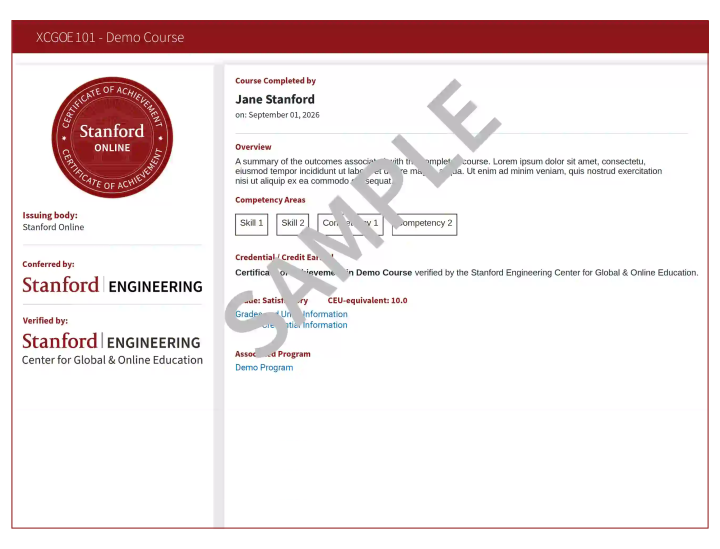
Certificate of Achievement from Stanford Online
All learners who successfully complete the course will be awarded a Stanford Online Certificate of Achievement, recognizing proficiency in the course material.
The Certificate of Achievement for an individual course will be issued in a digital badge format, verified on the blockchain. The digital badge format allows you to share your accomplishments with your network, verify your credentials to employers, and communicate the scope of your acquired expertise.
4 CEU-equivalent.
Past participant profiles
Work experience
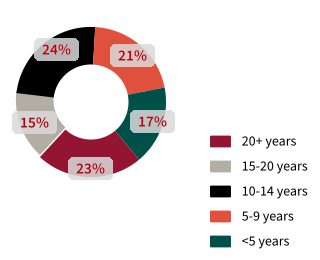
Top industries
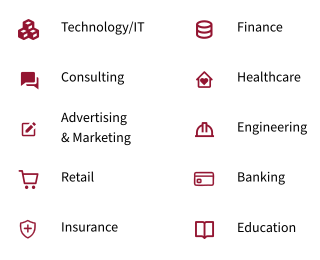
Top profiles
* Familiarity with the human-centered design process is helpful.
Learners feedback
“This course helped me step back and learn how to design better AI products from a human-computer interaction perspective. I learned how to keep human needs and HCI best practices at the center of the process, which was especially valuable as I have been working in this area for years.
The course material, modules, and examples were very valuable to my learning experience, and the assignments helped me apply what I learned in practice. I also appreciated the discussion forum, where posts and responses from peers with diverse backgrounds gave me new perspectives.
The capstone project helped me put all these learnings into practice, from research and design concepts to ethical review. The live sessions with Ayo and Professor Michael Bernstein also offered valuable insights. I really enjoyed this process and would definitely recommend this course.”...
Maria Joseph Daniel Victor
Principal UX Designer,
Amazon
“This course was my first exposure to AI as a subject, and it made me curious to learn more. I found the whole course valuable, especially the use of AI agents and how to apply guardrails to protect users and society.
The program also helped me think about how AI can improve technology companies and project management. Overall, I found the experience excellent, with excellent assignments, faculty live sessions, and office hours.”...
Luis Garza
Project Manager,
Apple
“The breadth of content in each module was great. I felt like I really learned something new, and I loved the mix of academic research and real-world examples I can use in my job. The content stayed interesting throughout, and the assignments and discussion posts were useful and thought-provoking.
The capstone project was especially valuable because it took me through the full arc, from user research to prototype to trust-calibrated variants, which helped make the theory concrete. Before this course, I thought of AI design mostly in terms of making AI helpful. The course reframed that for me: the goal is not just building user trust, but calibrating that trust to match the AI’s actual reliability.
Designing for calibrated trust has become a lens I now apply to every AI feature I evaluate at work. Overall, I feel more confident using AI thoughtfully in my design process.”...
Teressa Clark
UX Manager,
Colgate-Palmolive
Frequently asked questions
1
What will I learn in the UI/UX Design for AI Products course?
The course covers human-AI interaction, task-specific interface design, AI prototyping, user research, automation and user control, trust, explainability, and the thoughtful use of AI-supported design tools.
2
What will I be able to create by the end of the course?
You will develop and refine an AI-powered product experience through a three-part capstone project. You will identify a real user need, conduct user interviews, create both high- and low-fidelity prototypes, test them with users and improve the design by applying principles of trust, explainability, automation and user control.
3
How can I apply the course outcomes in my current role?
You can use the course frameworks to evaluate where AI can create meaningful user value, design AI-enabled features and workflows, test AI product concepts before development and make better decisions about automation, transparency and user control. These skills are relevant to UX and product design, product management, user research, and the development of AI-enabled applications.
4
Who is the UI/UX Design for AI Products course designed for?
The course is designed for UX, UI and product designers; design leaders; product managers and product owners; UX researchers and design strategists; and engineers or product builders working on AI-enabled applications. It is especially relevant to professionals who make decisions about how users interact with AI-powered features, products or workflows.
5
How long is the course, and how much time should I plan each week?
The course runs online for six weeks and requires approximately four to six hours per week. This includes weekly modules, live sessions, applied assignments and work on a multi-stage capstone project involving user research, prototyping and testing.
6
Do I need coding, AI or advanced design experience?
No coding or machine-learning model-building prerequisite is currently listed. Familiarity with the human-centered design process is helpful. Learners should be prepared to use a modern large language model and interface prototyping tools, but the course is focused on design decisions and human-AI interaction rather than software development.
7
Which AI and design tools will I use?
You may work with large language models such as ChatGPT for rapid AI behavior prototyping, along with Figma or other interface prototyping tools. You will also explore methods such as Wizard of Oz prototyping. The tools are indicative and may change, and the course does not provide formal training on individual platforms.
8
Will I receive a Certificate of Achievement?
All learners who successfully complete the course will be awarded a Stanford Online Certificate of Achievement, officially recognizing their proficiency of the course material. This certificate serves as a testament to their dedication and expertise in the subject matter and can be used to enhance their professional credentials and career opportunities. The Certificate of Achievement for an individual course will be issued in a digital badge format, verified on the blockchain.
9
Are any taxes applicable to this course?
Applicable taxes will be calculated and added at checkout in accordance with country/state regulations.
Connect with a Program Advisor for a 1:1 session
Didn't find what you were looking for? Schedule a call with one of our Global Alumni Program Advisors or call us at +1 315 871 5140.
Explore complementary learning experiences
AI-Driven Leadership and Product Design
Build capabilities across AI leadership and AI product design
Benefit from 15% savings on this multi-course series
Artificial intelligence is transforming how organizations make decisions and how products are designed and experienced. Effective leaders need the ability to guide AI adoption while understanding how AI systems shape user experiences and trust.
This multi-course series brings together AI-Driven Leadership: Strategies for the Future and UI/UX Design for AI Products, enabling learners to explore both strategic decision-making and AI product design principles.
Please note that our team is away from December 21, 2026 to January 5, 2027 for the year-end holidays. We look forward to addressing your queries when we resume operations in the new year.
Register now and boost your professional trajectory.
Starts on