

AI for Senior Executives
Evaluate AI through a leadership lens
AI for Senior Executives from Stanford Online is designed for experienced leaders responsible for enterprise strategy, investment decisions, governance, and long-term value creation. You will examine where generative AI and agentic AI can create differentiated business value, how to prioritize high-impact opportunities, and what it takes to scale adoption responsibly. This program combines online and asynchronous learning, an applied capstone project, and in-person immersion at Stanford University, giving you direct access to Stanford faculty and executive peers while respecting your time constraints. Sessions, both on campus and virtual, create opportunities for real-time strategic dialogue and relationship building, while asynchronous content lets you learn at your own pace.
The result: deeper engagement, stronger networks, and greater flexibility than any single learning format can offer.
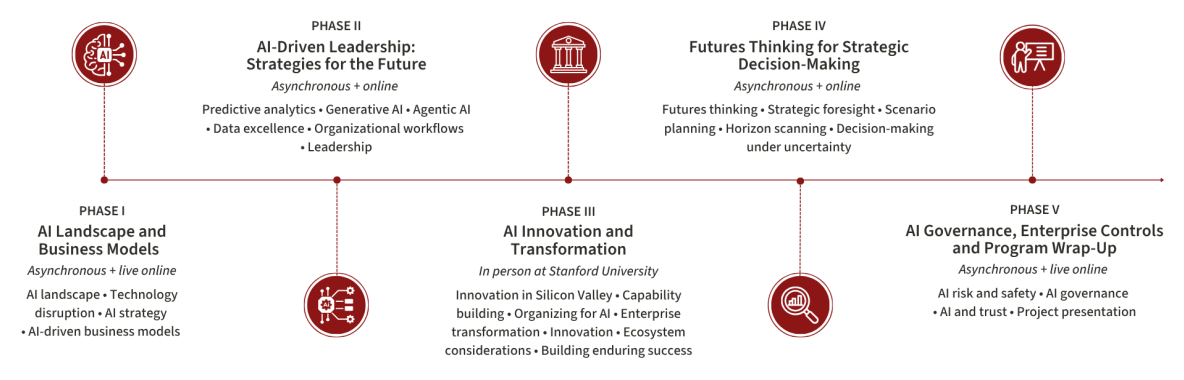
How the program journey unfolds
A snapshot of your in-person immersion experience
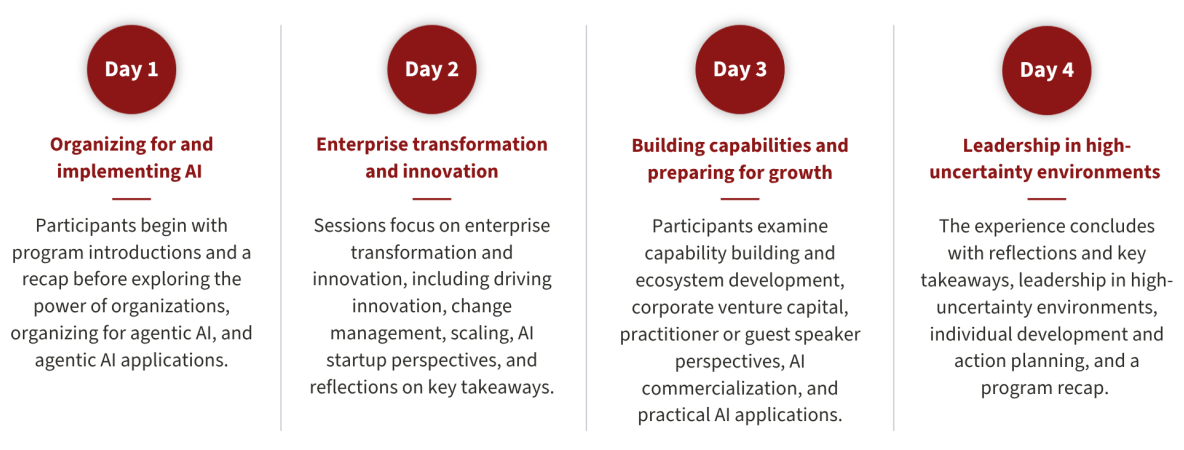
*The on-campus schedule and activities are subject to change.
**Participants are responsible for their own travel and accommodation during the on-campus immersion.
Leadership capabilities you will gain
Evaluate AI opportunities and risks across business functions using structured analytical frameworks.
Explain the principles of modern AI systems, including generative AI and agentic AI, and their relevance to organizational workflows.
Analyze key trade-offs in AI adoption, including considerations of cost, control, speed, and risk.
Design appropriate operating models, capabilities, and governance approaches to support scalable and responsible AI adoption.
Identify and prioritize AI-enabled innovation opportunities that create new products, services, business models, and sources of competitive advantage.
Who will benefit from this program?
C-suite and senior executives shaping enterprise strategy in an AI-driven business environment
AI and transformation leaders responsible for AI strategy, business transformation, and long-term value creation
Innovation and operations leaders overseeing innovation, operating models, and organizational capabilities
Risk and governance decision makers responsible for AI governance, enterprise risk, and responsible adoption
Business and functional leaders evaluating AI investments, organizational priorities, and strategic opportunities
*Participants are required to have 10+ years of industry experience.
Program outline
Phase I: AI Landscape and Business Models
Format: Asynchronous + Live online | Instructors: Saikat Chaudhuri, Diyi Yang, and Andrew Ng
Intro to the AI landscape
Navigating tech disruption
AI strategy
Disruptive AI-driven business models
Phase II: AI-Driven Leadership: Strategies for the Future
Format: Asynchronous + Online | Instructor: Melissa Valentine
How leaders create conditions for effective integration of predictive analytics
How leaders create conditions for effective integration of generative AI and agentic AI
Creating a culture of data excellence
Configuring workflows and decisions for machine learning (ML)
Configuring workflows for generative AI and agentic AI
How the work of managers will change in the age of AI
Phase III: AI Innovation and Transformation
Format: In-person | Duration: 3.5 days*
This phase comprises faculty-led academic sessions, practitioner insights, company visits, collaborative discussions, and executive networking. Participants examine topics including organizational design, enterprise transformation, innovation, ecosystem development, corporate venture capital, and leadership in high-uncertainty environments, concluding with individual action planning.
*Explore the sample on-campus agenda to see what participants can expect during the 3.5-day experience.
Phase IV: Futures Thinking for Strategic Decision-Making
Format: Asynchronous + Online | Instructor: Lisa Kay Solomon
How to lead and make decisions through increasingly uncertain times
How to take the long view when the short term can feel overwhelming
How to widen your field of view so you don’t get blindsided
How to use stories to better understand the future
How to make our visions of possible futures concrete
How to integrate futures into organizational processes for the long haul
Phase V: AI Governance, Enterprise Controls and Program Wrap-Up
Format: Asynchronous + Live online | Instructors: Saikat Chaudhuri, Mykel Kochenderfer, Rob Reich, and Jeff Hancock
This includes two live online and one asynchronous session.
Program wrap-up capstone presentation: Participants will present their final projects, showcasing key learnings, outcomes, and practical applications from the program. This final project will be a culmination of the concepts and frameworks explored across each phase to advance an AI initiative relevant to your organization. Built around the pillars of technology, strategy, and organizational readiness, the capstone guides you in developing a practical, implementation-oriented approach that helps move your initiative from vision toward execution.
*Note that faculty are subject to change based on availability.
A blended experience designed for executive priorities

Learn from Stanford faculty, instructors, and experts
Engage and learn with Stanford faculty at the intersection of AI, strategy, leadership, and organizational transformation. Experience Silicon Valley's innovation ecosystem through discussions on emerging research and exposure to innovative AI startups.

In-person immersion at Stanford University
Combine asynchronous content, online sessions and a 3.5-day on-campus experience within one integrated format.

Navigate three layers of AI-driven business impact
Explore AI through three connected layers: strategic value, organizational transformation, and responsible governance. Drawing on executive frameworks, you will examine AI strategy, futures thinking, operating models, risk, and enterprise controls to guide AI adoption at scale.

Pressure-test strategic priorities through applied project work
Complete two capstone projects grounded in real organizational challenges. Plan an AI capability, assess readiness and governance, and use futures thinking to examine a strategic priority. Present your outcomes and practical implications in a final program wrap-up presentation.

Network with a global cohort
Exchange perspectives with leaders across industries and markets during the on-campus immersion.

Earn three Stanford Online credentials
Receive two digital badges and a digital Professional Certificate upon successful completion of the program.
Instructors
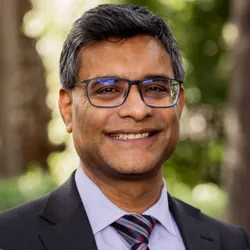
Saikat Chaudhuri
Professor of Management Science and Engineering, Stanford University and Academic Director, Stanford Technology Ventures Program (STVP)
Saikat Chaudhuri was the inaugural academic director of the Management, Entrepreneurship & Technology (M.E.T.) Program and the Berkeley Haas Entrepreneurship Hub at the Univer...
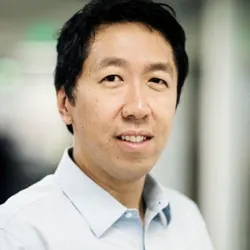
Andrew Ng
Adjunct Professor, Computer Science, Stanford University
Andrew Ng is Founder of DeepLearning.AI, Founder and CEO of Landing AI, General Partner at AI Fund, Chairman and Co-Founder of Coursera, and an Adjunct Professor at Stanford U...

Diyi Yang
Assistant Professor of Computer Science, Stanford University
Diyi Yang is an Assistant Professor in Computer Science at Stanford University. Professor Yang's research interests are Computational Social Science and Natural Language Proce...
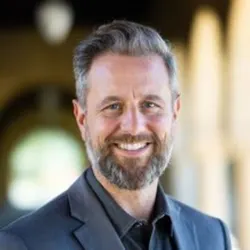
Jeffrey Hancock
Harry and Norman Chandler Professor of Communication and Senior Fellow at the Freeman Spogli Institute for International Studies, Stanford University
Jeff Hancock is the founding director of the Stanford Social Media Lab and is Harry and Norman Chandler Professor of Communication at Stanford University. Professor Hancock an...

Lisa Kay Solomon
Futurist in Residence and Lecturer, Hasso Plattner Institute of Design, Stanford University
Lisa Kay Solomon is a futurist in residence and lecturer at Stanford’s Hasso Plattner Institute of Design (known informally as the Stanford d.school), where she leads futures ...

Melissa Valentine
Associate Professor of Management Science and Engineering, Stanford University
Melissa Valentine is an associate professor at Stanford University in the Department of Management Science and Engineering and a senior fellow at the Stanford Institute for Hu...
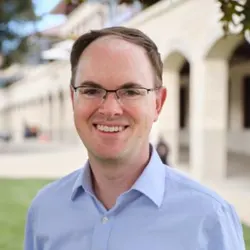
Mykel Kochenderfer
Associate Professor of Aeronautics and Astronautics, Senior Fellow at the Stanford Institute for Human-Centered AI and Associate Professor, by courtesy, of Computer Science, Stanford University
Mykel Kochenderfer is Associate Professor of Aeronautics and Astronautics at Stanford University. Prior to joining the faculty, he was at MIT Lincoln Laboratory where he worke...

Rob Reich
McGregor-Girand Professor of Social Ethics of Science and Technology, Senior Fellow at the Stanford Institute for HAI, Professor, by courtesy, of Education, of Philosophy, of Law and Senior Fellow, by courtesy, at the Freeman Spogli Institute
Rob Reich is the McGregor-Girand Professor of Social Ethics of Science and Technology at Stanford University. In 2024-25, Rob was on public service leave as Senior Advisor to ...
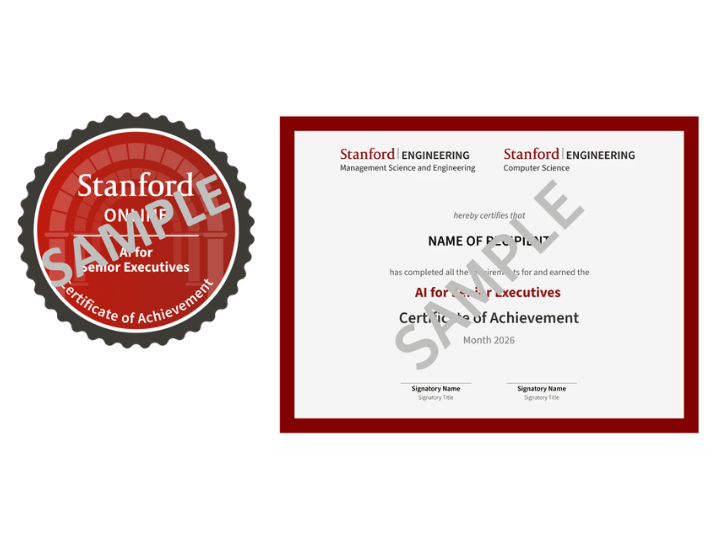
Program credentials
All learners who successfully complete this integrated learning journey will earn three Stanford credentials: a digital badge for completing AI-Driven Leadership: Strategies for the Future, a digital badge for completing Futures Thinking for Strategic Decision-Making, and a digital Professional Certificate for completing the AI for Senior Executives program. All three credentials will be verified on the blockchain, allowing you to share your accomplishments with your employer and professional network and communicate the scope of your acquired expertise.
11.5 CEU-equivalent.
The Continuing Education Unit (CEU) is defined as 10 contact hours of ongoing learning to indicate the amount of time they have devoted to a non-credit/non-degree professional development program.
FAQs
How is the AI for Senior Executives program structured?
The program combines asynchronous learning, online sessions, an applied capstone, and a 3.5-day on-campus immersion at Stanford University. Across five phases, participants move from AI strategy and business models to organizational transformation, futures thinking, governance, and a final program wrap-up presentation.
How do the program components work together?
The program brings together AI strategy, organizational transformation, futures thinking, and governance to help senior leaders examine AI from multiple executive perspectives. Participants explore how to identify high-value AI opportunities, build the conditions for responsible adoption, test assumptions about the future, and connect near-term decisions with long-term enterprise transformation.
Why does the program combine AI leadership and futures thinking?
AI-Driven Leadership: Strategies for the Future enable participants to examine the workflows, capabilities, operating models, and governance conditions required for AI adoption. Futures Thinking for Strategic Decision-Making equips them to explore uncertainty, test assumptions, and consider multiple possible business environments. Together, these perspectives support decisions that address immediate transformation priorities and longer-term strategic change.
What does Stanford University immersion include?
The on-campus immersion includes faculty-led academic sessions, practitioner perspectives, exposure to young AI startups, collaborative discussions, action planning, and executive networking. The experience explores innovation, capability building, organizational design, enterprise transformation, and leadership in high-uncertainty environments.
What learning outcomes can senior executives expect from the program?
The program strengthens participants’ ability to identify high-value AI opportunities, evaluate strategic trade-offs, assess organizational readiness, and align AI initiatives with broader business priorities. It also helps them consider how operating models, governance, leadership, and futures thinking shape responsible AI transformation.
What distinctive perspective does the five-phase journey offer senior executives?
The journey brings together leadership, innovation, futures thinking, and governance, allowing participants to examine business priorities through interconnected strategic lenses. Across the five phases, they pressure-test assumptions, surface critical dependencies, and connect near-term AI decisions with organizational design, enterprise controls, and long-term scenarios.
How do I know if AI for Senior Executives is right for me?
The program is best suited for senior leaders with more than 10 years of industry experience who shape AI strategy, investment priorities, organizational transformation, innovation, governance, or risk. It is particularly relevant for leaders who make consequential AI decisions and want to examine them through perspectives on business models, operating approaches, organizational readiness, futures thinking, and responsible adoption.
What is the expected time commitment?
The program is designed to support learning alongside senior-level professional responsibilities. It combines asynchronous modules, online sessions, and a 3.5-day on-campus immersion, allowing participants to engage with core concepts flexibly while still benefiting from discussion, peer exchange, and applied learning.
Are any taxes applicable to this course?
Applicable taxes will be calculated and added at checkout in accordance with country/state regulations.
Connect with a Program Advisor for a 1:1 session
Didn't find what you were looking for? Schedule a call with one of our Global Alumni Program Advisors or call us at +1 315 871 5140
Register now and boost your professional trajectory.
Starts on